
Introduction
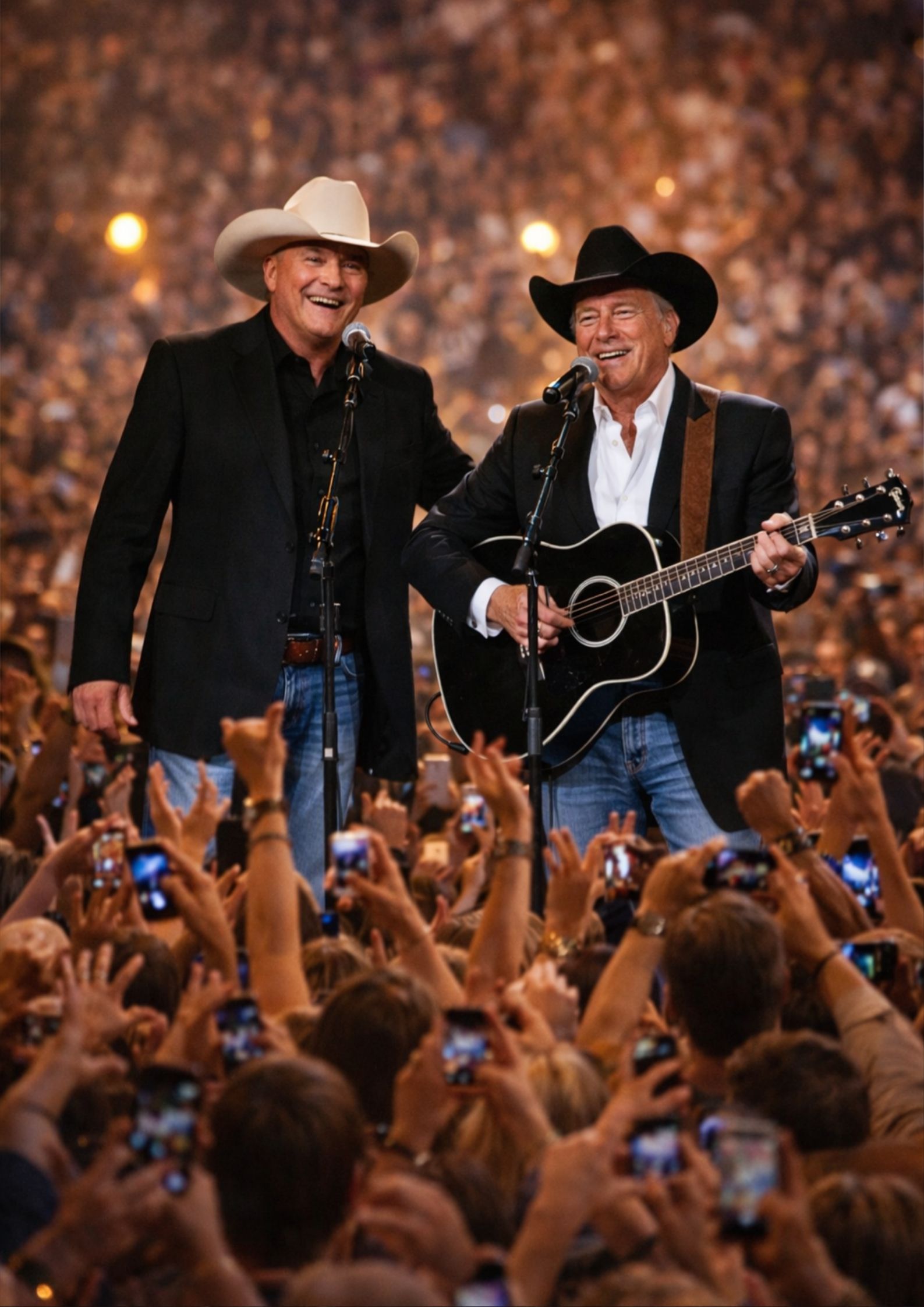
"50,000 Voices, One Verdict": When George Strait and Alan Jackson Sang Murder on Music Row, the Crowd Didn't Just Listen — It Ruled
Some songs fade into memory like old photographs, softened by time and nostalgia. Others grow sharper with every passing year, turning from melody into testimony. When George Strait and Alan Jackson stepped onto the stage together and revived "Murder on Music Row," it didn't feel like a tribute to the past. It felt like a courtroom reopening a case many listeners thought had already been decided — only to discover the verdict was still unfinished.
For longtime country fans, the song has never been comfortable. It was never meant to be. Written as a quiet indictment of an industry drifting away from its roots, "Murder on Music Row" didn't rely on anger or spectacle. Instead, it delivered something more unsettling: calm conviction. And in an era when louder often replaces deeper, that calmness now feels almost radical.
Two voices that never needed to shout
George Strait has built a career on understatement. He doesn't chase theatrics, and he never seems interested in overpowering a moment. When he sings, the room leans toward him — not because he demands attention, but because he earns it through stillness. Alan Jackson, on the other hand, carries the voice of everyday honesty. There's a familiarity in his delivery that feels like a conversation at a kitchen table rather than a performance under stadium lights.
Together, their presence transformed the song from commentary into something closer to a declaration.
As the opening notes drifted across the stadium, there was no elaborate staging, no dramatic buildup designed for viral clips. Just two artists standing where they've always stood — inside the music itself. And for many older listeners in the crowd, that simplicity felt almost shocking in its power. It wasn't nostalgia they were hearing. It was recognition.
The moment the crowd became a jury
Reports described nearly 50,000 voices filling the space, but what mattered wasn't just the volume — it was the unity. The reaction didn't resemble a typical concert roar. It felt more deliberate, more personal. People weren't cheering at a trick or a surprise guest; they were responding to an idea they understood deeply.
Because for decades, fans have debated whether country music has lost something along the way — whether authenticity has been traded for speed, polish, and quick applause. "Murder on Music Row" has always given those concerns a melody, but hearing it delivered by Strait and Jackson together made the message feel urgent again.
For a few minutes, the audience stopped feeling like spectators. They sounded like witnesses agreeing on the record: Yes. That's what we've been missing.
Why the song feels different now
When the song first appeared, it was viewed by some as a protest — a gentle pushback against shifting industry trends. Today, it sounds less like protest and more like preservation. Older listeners who grew up when country radio felt like a front porch instead of a marketplace heard something deeper: a reminder that tradition doesn't disappear quietly; it waits for someone brave enough to sing it again.
Strait's steady tone and Jackson's plainspoken phrasing didn't dramatize the message. They allowed it to stand on its own. That restraint is precisely what made the performance feel heavier than a grand production ever could. In a culture that often rewards excess, the absence of spectacle became the most powerful statement of all.

More than a duet — a mirror for the genre
What made the performance truly compelling wasn't simply the reunion of two icons. It was the sense that their voices carried decades of shared memory — not just their own, but the audience's. Songs about heartbreak and resilience have always lived at the heart of country music, but "Murder on Music Row" asks a different question: what happens when a genre forgets its own reflection?
By bringing the song back into a stadium setting, Strait and Jackson didn't accuse or scold. They reminded. And sometimes a reminder lands harder than an argument.
The verdict that echoed after the final note
When the last chord faded, the applause felt less like celebration and more like affirmation — as if thousands of people had just agreed on something they'd been feeling quietly for years. It wasn't about rejecting change. It was about protecting the soul of a genre that once thrived on storytelling, melody, and emotional honesty.
"50,000 Voices, One Verdict" isn't just a headline. It's a description of a moment when country music's past and present stood side by side and asked the same question: What truly defines this sound we love?
For a few unforgettable minutes, George Strait and Alan Jackson didn't just sing a song. They turned a stadium into a conversation — one where older listeners, seasoned by decades of music and memory, finally heard their own thoughts reflected back at them.
And in that shared silence after the roar faded, the message lingered longer than any encore ever could.